
Steam Shower Installation: What Your Libbie Mill Townhome Needs
Thinking about adding a steam shower to your Libbie Mill townhome? The luxury of a steam shower comes with specific technical requirements that many Richmond homeowners overlook. Before you start demolition or shopping for tiles, you need to know if your home can handle the electrical demands, plumbing modifications, and structural changes required. This guide breaks down everything you need to consider for a successful steam shower installation in your Richmond townhome. Richmond Department of Planning and Development Review.
Structural Requirements: Ceiling Height and Slopes
Steam showers need specific ceiling configurations to work properly. The maximum ceiling height for most residential steam generators is 8 feet. Anything taller requires a more powerful unit and increases heat loss. Your ceiling also needs a slight slope of about 2 inches per foot toward the steam outlet. This prevents condensation from dripping on you while you steam. In Libbie Mill’s newer construction, many townhomes have standard 9-foot ceilings on the first floor. That extra foot means you’ll need either a custom generator or ceiling modifications before installation can begin.. Read more about Managing Condensation and Humidity in Your Small Museum District Bathroom.
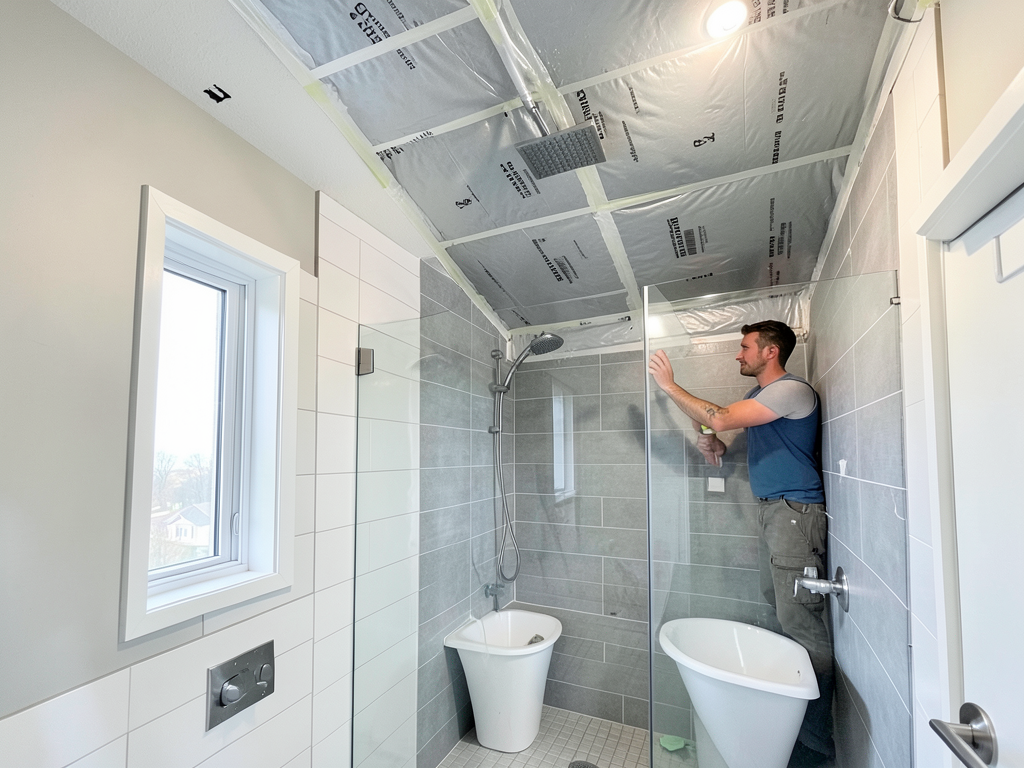
Image description: Technical diagram showing proper steam shower ceiling slope of 2 inches per foot toward the steam outlet with marked measurements.
Electrical Specifications: Voltage and Dedicated Circuits
Steam generators require substantial power. Most residential units need a dedicated 240-volt circuit with amperage ranging from 30 to 60 amps depending on the generator size. Your existing electrical panel must have available capacity for this new circuit. Many Libbie Mill townhomes built in the mid-2010s have 150-amp service panels, which can be tight when adding high-demand fixtures like steam showers. You cannot share this circuit with other appliances. The National Electrical Code (NEC) Article 680.22 requires GFCI protection for all steam shower circuits. A licensed electrician must install this dedicated line from your main panel to the generator location.
Plumbing Essentials: Water Lines and Drainage
Steam showers need both hot and cold water lines to the generator. The generator uses cold water to create steam, so you need a dedicated cold water supply line with a shut-off valve within 25 feet of the unit. Water pressure should be between 30 and 80 PSI for optimal performance. Richmond’s municipal water typically runs around 60 PSI, which falls within the acceptable range. However, the drainage system requires special attention. Steam showers produce about 1.5 gallons of condensate per 20-minute session. Your existing drain must handle this volume plus the shower water. The International Plumbing Code (IPC) Section 408.3 requires a P-trap on the steam generator’s drain line to prevent sewer gases from entering your home. Who to Call for a 24-Hour Plumbing Emergency in Downtown Richmond.
Material Selection: Why Tile Porosity Matters
The materials you choose for your steam shower affect both performance and longevity. Non-porous materials like porcelain tile, glass, and natural stone with low absorption rates work best. The Porcelain Enamel Institute (PEI) rates tiles on durability and water absorption. For steam showers, you need tiles rated at least PEI 3 or higher. Porous materials like standard ceramic or natural stones with high absorption rates can harbor mold and bacteria in the humid environment. Your vapor barrier installation becomes critical here. You need a 6-mil polyethylene vapor barrier behind all surfaces, sealed at all seams with vapor barrier tape. This prevents moisture from penetrating your walls and causing structural damage to your Libbie Mill townhome’s framing. Tankless Water Heater Installation for Modern Homes in Short Pump.

Image description: Close-up of steam shower installation showing vapor barrier, waterproofing membrane, and non-porous porcelain tile application in a residential bathroom. Emergency Water Shut-Off Service.
Richmond Building Codes and Permit Requirements
Before starting any steam shower project in Richmond, you need proper permits. The Richmond Department of Planning and Development Review requires permits for electrical modifications, plumbing changes, and structural alterations. Permit fees typically range from $150 to $350 depending on the scope of work. The Virginia Uniform Statewide Building Code (USBC) Chapter 43 covers plumbing fixtures and requires that all steam shower installations meet specific ventilation and drainage standards. Your contractor must submit detailed plans showing generator placement, electrical loads, and drainage configurations. Richmond inspectors will verify that your installation meets all local codes before final approval. Skipping permits can result in fines up to $2,500 and may void your homeowner’s insurance if problems arise later. Plumbing Bon Air.
Steam Generator Placement: Distance and Ventilation
Where you place your steam generator affects both performance and installation cost. Most manufacturers recommend keeping the generator within 25 feet of the steam shower to maintain optimal steam delivery. The generator needs adequate ventilation to prevent overheating. You’ll need to cut an opening in an adjacent wall or closet for the unit. Steam generators produce about 1,500 to 3,000 BTUs per hour, so the surrounding space must dissipate this heat. Many Libbie Mill townhomes have limited mechanical space, which might require creative solutions like installing the generator in a nearby bedroom closet with proper ventilation. The generator also needs a drain for its own condensate, typically a 3/4-inch line running to your home’s main drain stack.
Maintenance: Dealing with Richmond’s Water Hardness
Richmond’s municipal water has a hardness level of 7 to 11 grains per gallon, which falls in the moderate to hard range. This mineral content affects your steam generator’s lifespan and performance. Calcium and magnesium deposits build up inside the generator over time, reducing efficiency and potentially causing failure. You need either a whole-house water softener or a dedicated descaling system for your steam shower. Most manufacturers recommend monthly cleaning with a citric acid solution to remove mineral buildup. Without proper maintenance, you might see white scale deposits on your steam heads or experience reduced steam output within 12 to 18 months. A quality water filtration system can extend your generator’s life by 3 to 5 years and maintain consistent steam production. Plumbing Richmond.
Slip-Resistance Standards for Steam Room Flooring
Steam shower floors must meet specific slip-resistance requirements to prevent accidents in the wet, humid environment. The Americans with Disabilities Act (ADA) recommends a static coefficient of friction (COF) of 0.60 or higher for wet surfaces. Many porcelain tiles designed for steam showers achieve COF ratings between 0.65 and 0.80 when wet. Your flooring choice also affects heat retention and comfort. Smaller tiles with more grout lines provide better traction but can be harder to clean. Larger format tiles offer a sleeker look but may become slippery when wet. Consider adding a small bench with non-slip feet for added safety and comfort during longer steam sessions.. Read more about Choosing Between a Rain Showerhead and a Multi-Jet System for Your Hallsley Remodel.
Cost Factors and Timeline Considerations
A steam shower installation in your Libbie Mill townhome typically costs between $8,000 and $15,000, depending on the complexity of the project. The generator itself costs $1,500 to $3,500, while electrical upgrades might add $1,000 to $2,500 if your panel needs expansion. Plumbing modifications usually cost $800 to $1,500. The most significant variable is whether you need structural modifications. If your ceiling needs lowering or your walls require reframing, costs can increase by $2,000 to $4,000. Most installations take 3 to 5 days for a straightforward project, but complex modifications might extend to 7 to 10 days. During Richmond’s humid summer months, additional waterproofing steps may be necessary to prevent moisture migration into adjacent rooms.
Image description: Steam shower control panel and steam head installation showing proper placement height and waterproof housing in a residential bathroom setting.
Professional Installation vs. DIY
Steam shower installation requires multiple trades working in coordination: electricians, plumbers, tile setters, and sometimes carpenters. Each trade must complete their work in the correct sequence, with proper inspections between phases. DIY installation might save on labor costs initially, but mistakes can lead to water damage, electrical hazards, or mold growth that cost far more to repair than professional installation would have cost. Professional installers also provide warranties on their work and can navigate the permit process efficiently. In Richmond’s humid climate, improper installation can lead to mold growth within 30 to 60 days, particularly in the wall cavities behind your steam shower.
Energy Efficiency and Operating Costs
Modern steam generators are surprisingly energy-efficient. A typical 20-minute steam session uses about 2 gallons of water and costs approximately $0.25 to $0.40 in electricity, depending on your generator’s power rating and local utility rates. Compare this to a traditional shower that uses 25 to 50 gallons of water per session. Steam showers also heat up faster than traditional saunas, typically reaching optimal temperature in 5 to 10 minutes versus 30 to 45 minutes for a sauna. The energy savings and water conservation can offset some of the initial installation costs over time, particularly in a household with multiple users.
Health Benefits and Usage Considerations
Beyond luxury, steam showers offer documented health benefits. The moist heat helps open airways, which can benefit people with asthma or allergies. Steam therapy may improve circulation, reduce muscle tension, and promote relaxation. However, steam showers aren’t suitable for everyone. People with certain heart conditions, pregnant women, and those with specific skin conditions should consult their doctor before using a steam shower. The high humidity can also affect medications and medical devices. If you have young children or elderly family members, consider installing a temperature control system to prevent accidental scalding from steam that can reach 120°F or higher.
Conclusion: Is a Steam Shower Right for Your Libbie Mill Townhome?
Adding a steam shower to your Libbie Mill townhome can increase both your home’s value and your quality of life, but it requires careful planning and professional execution. The key factors are your home’s existing electrical capacity, plumbing infrastructure, and available space for the generator. Richmond’s building codes and permit requirements must be followed to ensure a safe, legal installation. The investment ranges from $8,000 to $15,000, with most projects taking 3 to 5 days to complete. Before you begin, schedule a professional assessment to evaluate your specific situation. A qualified contractor can identify potential challenges unique to your townhome’s construction and help you avoid costly mistakes. Call (804) 602-4944 today to schedule your steam shower consultation and take the first step toward adding this luxurious feature to your home.
Frequently Asked Questions
How long does a steam shower installation take in a Libbie Mill townhome?
Most steam shower installations take 3 to 5 days for straightforward projects. Complex installations requiring electrical panel upgrades or structural modifications can extend to 7 to 10 days. The timeline includes demolition, rough-in work, inspections, and final installation.
Do I need a permit for a steam shower in Richmond?
Yes. The Richmond Department of Planning and Development Review requires permits for electrical modifications, plumbing changes, and structural alterations involved in steam shower installation. Permit fees typically range from $150 to $350, and inspections are required at various stages of the project.
Can my existing bathroom drain handle a steam shower?
Most existing bathroom drains can handle the additional condensate from a steam shower, but they must meet specific requirements. The International Plumbing Code requires a P-trap on the steam generator’s drain line, and your drain must handle approximately 1.5 gallons of condensate per 20-minute steam session.
What maintenance does a steam shower require?
Steam showers require monthly cleaning with a citric acid solution to remove mineral deposits, especially important in Richmond’s moderately hard water. You should also wipe down surfaces after each use and inspect the vapor barrier annually for any signs of moisture penetration behind tiles.
How much does it cost to operate a steam shower?
A typical 20-minute steam session costs approximately $0.25 to $0.40 in electricity and uses about 2 gallons of water. This is significantly less than a traditional shower, which uses 25 to 50 gallons of water per session. Annual operating costs for regular use typically range from $50 to $100.
Next Steps for Your Steam Shower Project
Ready to move forward with your steam shower installation? The first step is a professional site assessment to evaluate your home’s specific requirements. During this assessment, we’ll check your electrical panel capacity, plumbing infrastructure, and available space for the generator. We’ll also help you navigate the permit process and provide a detailed quote for your project. Don’t let uncertainty about technical requirements stop you from adding this valuable feature to your home. Call (804) 602-4944 today to schedule your consultation and get expert guidance on bringing the luxury of a steam shower to your Libbie Mill townhome. For more information, visit Combined Sewer System Challenges.
You may also find this helpful. Designing a Low Maintenance Walk-In Shower for Your Home in The Grove.
{
“@context”: “https://schema.org”,
“@type”: “BlogPosting”,
“headline”: “What to Consider Before Adding a Steam Shower to Your Libbie Mill Townhome”,
“description”: “Planning a steam shower in your Libbie Mill townhome? Discover electrical, plumbing, and structural requirements before you begin. Call (804) 602-4944 for expert guidance.”,
“wordCount”: 2085,
“datePublished”: “2026-05-11T09:45:00.000Z”,
“dateModified”: “2026-05-11T09:45:00.000Z”,
“inLanguage”: “en-US”,
“mainEntityOfPage”: {
“@type”: “WebPage”,
“@id”: “https://summitplumbingrichmond.com”
},
“publisher”: {
“@type”: “LocalBusiness”,
“name”: “Summit Plumbing Richmond”,
“url”: “https://summitplumbingrichmond.com”
},
“author”: {
“@type”: “Organization”,
“name”: “Summit Plumbing Richmond”,
“url”: “https://summitplumbingrichmond.com”
},
“image”: {
“@type”: “ImageObject”,
“url”: “https://summitplumbingrichmond.com/wp-content/uploads/2026/03/what-to-consider-before-adding-a-steam-shower-to-y-1.png”
}
}
{
“@context”: “https://schema.org”,
“@type”: “Plumber”,
“name”: “Summit Plumbing Richmond”,
“url”: “https://summitplumbingrichmond.com”,
“address”: {
“@type”: “PostalAddress”,
“addressLocality”: “Richmond”
},
“areaServed”: {
“@type”: “City”,
“name”: “Richmond”
}
}
{
“@context”: “https://schema.org”,
“@type”: “FAQPage”,
“mainEntity”: [
{
“@type”: “Question”,
“name”: “Conclusion: Is a Steam Shower Right for Your Libbie Mill Townhome?”,
“acceptedAnswer”: {
“@type”: “Answer”,
“text”: “Adding a steam shower to your Libbie Mill townhome can increase both your home’s value and your quality of life, but it requires careful planning and professional execution. The key factors are your home’s existing electrical capacity, plumbing infrastructure, and available space for the generator. Richmond’s building codes and permit requirements must be followed to ensure a safe, legal installation. The investment ranges from $8,000 to $15,000, with most projects taking 3 to 5 days to complete. Before you begin, schedule a professional assessment to evaluate your specific situation. A qualified contractor can identify potential challenges unique to your townhome’s construction and help you avoid costly mistakes. Call (804) 602-4944 today to schedule your steam shower consultation and take the first step toward adding this luxurious feature to your home.”
}
},
{
“@type”: “Question”,
“name”: “How long does a steam shower installation take in a Libbie Mill townhome?”,
“acceptedAnswer”: {
“@type”: “Answer”,
“text”: “Most steam shower installations take 3 to 5 days for straightforward projects. Complex installations requiring electrical panel upgrades or structural modifications can extend to 7 to 10 days. The timeline includes demolition, rough-in work, inspections, and final installation.”
}
},
{
“@type”: “Question”,
“name”: “Do I need a permit for a steam shower in Richmond?”,
“acceptedAnswer”: {
“@type”: “Answer”,
“text”: “Yes. The Richmond Department of Planning and Development Review requires permits for electrical modifications, plumbing changes, and structural alterations involved in steam shower installation. Permit fees typically range from $150 to $350, and inspections are required at various stages of the project.”
}
},
{
“@type”: “Question”,
“name”: “Can my existing bathroom drain handle a steam shower?”,
“acceptedAnswer”: {
“@type”: “Answer”,
“text”: “Most existing bathroom drains can handle the additional condensate from a steam shower, but they must meet specific requirements. The International Plumbing Code requires a P-trap on the steam generator’s drain line, and your drain must handle approximately 1.5 gallons of condensate per 20-minute steam session.”
}
},
{
“@type”: “Question”,
“name”: “What maintenance does a steam shower require?”,
“acceptedAnswer”: {
“@type”: “Answer”,
“text”: “Steam showers require monthly cleaning with a citric acid solution to remove mineral deposits, especially important in Richmond’s moderately hard water. You should also wipe down surfaces after each use and inspect the vapor barrier annually for any signs of moisture penetration behind tiles.”
}
},
{
“@type”: “Question”,
“name”: “How much does it cost to operate a steam shower?”,
“acceptedAnswer”: {
“@type”: “Answer”,
“text”: “A typical 20-minute steam session costs approximately $0.25 to $0.40 in electricity and uses about 2 gallons of water. This is significantly less than a traditional shower, which uses 25 to 50 gallons of water per session. Annual operating costs for regular use typically range from $50 to $100.”
}
}
]
}
{
“@context”: “https://schema.org”,
“@type”: “BreadcrumbList”,
“itemListElement”: [
{
“@type”: “ListItem”,
“position”: 1,
“name”: “Home”,
“item”: “https://summitplumbingrichmond.com”
},
{
“@type”: “ListItem”,
“position”: 2,
“name”: “Blog”,
“item”: “https://summitplumbingrichmond.com/blog”
},
{
“@type”: “ListItem”,
“position”: 3,
“name”: “What to Consider Before Adding a Steam Shower to Your Libbie Mill Townhome”
}
]
}
{
“@context”: “https://schema.org”,
“@type”: “Service”,
“serviceType”: “Plumbing”,
“provider”: {
“@type”: “LocalBusiness”,
“name”: “Summit Plumbing Richmond”,
“url”: “https://summitplumbingrichmond.com”
},
“areaServed”: {
“@type”: “City”,
“name”: “Richmond”
},
“description”: “Planning a steam shower in your Libbie Mill townhome? Discover electrical, plumbing, and structural requirements before you begin. Call (804) 602-4944 for expert guidance.”
}