
Identifying and Fixing Hidden Water Leaks in Church Hill Row Homes
Water leaks in Church Hill row homes require specialized expertise. These 19th-century brick buildings with their original plaster walls and hardwood floors demand non-invasive detection methods that preserve historic character. If you hear water running when all fixtures are off or notice damp spots on interior walls, you need immediate professional attention before structural damage occurs. Tankless Water Heater Installation for Modern Homes in Short Pump.
Common Signs of Hidden Water Leaks in Church Hill Homes
Historic row homes in the 23223 zip code develop unique leak patterns. The original galvanized pipes corrode from the inside out over decades. You might notice a musty smell near basement walls where clay sewer lines have cracked from soil settling. Water meters that jump even when all fixtures are off indicate a pressurized leak somewhere in the system. Sewer Line Repairs for Historic Houses in the Museum District.
Church Hill’s steep streets create unusual water pressure variations. Homes on East Grace Street experience different pressure than those near Libby Hill Park. This pressure fluctuation stresses older pipe joints. You might hear a faint hissing sound behind walls where cast iron drain pipes have separated at their seams. EPA WaterSense Program.
Foundation cracks in Church Hill row homes often signal water problems. The expansive red clay soil in Richmond shifts with moisture changes. When water accumulates under your foundation, it causes the brick piers to settle unevenly. This creates diagonal cracks in interior walls and doors that stick in their frames. Plumbing Richmond.
Non-Invasive Detection Technology We Use
We locate leaks without destructive testing. Our thermal imaging cameras detect temperature variations behind walls where water cools the surrounding materials. The camera displays these cool spots as blue areas on the screen. This technology works particularly well in Church Hill’s older homes where plaster walls can’t be easily removed.
Acoustic ground microphones amplify the sound of water escaping under pressure. Even a pinhole leak in a copper pipe produces a distinctive high-frequency hiss. Our technicians use these devices to pinpoint leaks within inches of their location. This precision prevents unnecessary wall demolition in your historic home.
Tracer gas detection works when water leaks are too small to hear. We introduce a safe, non-toxic gas into your plumbing system. The gas escapes through the leak point and rises through building materials. Our sensors detect this gas and map the exact leak location. This method works exceptionally well for slab leaks under Church Hill’s original heart pine floors. Who to Call for a 24-Hour Plumbing Emergency in Downtown Richmond.
Moisture meters measure water content in building materials. We insert probes into wall cavities through tiny access holes. The meter displays moisture levels as percentages. Readings above 15% indicate active water intrusion. This testing helps us determine if a stain is from an active leak or old damage.
Why Church Hill’s Historic Plumbing Requires Specialist Care
Church Hill row homes contain plumbing materials no longer in use. Original lead service lines connect many homes to the city water main. These pipes corrode from the outside in due to Richmond’s acidic soil. The corrosion creates weak spots that eventually fail. Virginia’s Uniform Statewide Building Code now requires replacement of lead service lines during major renovations. Virginia Uniform Statewide Building Code.
Galvanized steel pipes were standard in homes built before 1960. These pipes develop internal corrosion that restricts water flow by up to 75%. The corrosion also creates rough surfaces where mineral deposits accumulate. This combination reduces water pressure and increases the likelihood of pinhole leaks. Our inspection includes checking for galvanized pipe corrosion using specialized cameras.
Historic row homes share common walls with neighbors. A leak in your plumbing can affect adjacent units. Water travels laterally through shared floor joists and wall cavities. We use moisture mapping to track water migration patterns. This helps us identify the true source of leaks that appear in multiple units. Plumbing Bon Air.
Richmond’s freeze-thaw cycles stress older plumbing systems. When temperatures drop below 20°F, water in pipes can freeze and expand. This expansion cracks pipes and separates soldered joints. Church Hill’s brick construction retains cold longer than modern framing. This extended exposure increases freeze risk in exterior wall plumbing.
Our 24/7 Emergency Service Area in Richmond
We serve Church Hill and surrounding historic neighborhoods. Our response time to the 23223 zip code averages 45 minutes during business hours. After-hours emergencies receive priority service. We maintain fully stocked service vehicles in Bon Air, allowing rapid deployment across the Richmond metro area.
Shockoe Bottom residents face similar plumbing challenges. The area’s low elevation near the James River creates high water table conditions. This hydrostatic pressure forces water through foundation cracks. Our basement waterproofing specialists address these unique Church Hill-adjacent issues.
Union Hill homes built in the 1890s often contain original plumbing systems. These systems require careful evaluation before any repairs. We document existing conditions with video inspection cameras before starting work. This protects both your home’s historic value and our warranty obligations.
Water Main Line Replacement in Historic Districts
Main water line replacement in Church Hill requires special permits from Richmond’s Department of Public Works. The city mandates trenchless replacement methods when possible to minimize street disruption. We use directional boring technology to install new service lines without digging up cobblestone sidewalks or mature tree roots.
Older water mains develop multiple failure points. A single leak often indicates widespread pipe deterioration. We inspect the entire service line using video cameras. This inspection reveals corrosion patterns, joint separations, and root intrusions. Based on these findings, we recommend either spot repairs or complete line replacement.
Permits for water main work in historic districts require approval from the Richmond Board of Architectural Review. We prepare detailed replacement plans showing how new piping routes avoid damage to historic features. Our plans include protection measures for original brickwork, iron railings, and granite stoops.
Thermal Imaging for Hidden Pipe Leaks
Thermal imaging detects water leaks through temperature differences. Water cools surrounding materials by 5-10 degrees compared to dry areas. Our infrared cameras display these temperature variations as color gradients. Blue areas indicate cool, wet materials while red areas show normal temperatures.
This technology works through various building materials. We can scan plaster walls, hardwood floors, and even ceramic tile. The camera’s resolution allows us to detect temperature differences as small as 0.1 degree. This sensitivity helps locate leaks behind finished surfaces without destructive testing.
Thermal imaging also identifies moisture patterns in flat roofs common in some Church Hill commercial buildings. Water trapped under roofing membranes creates distinct thermal signatures. We use this technology to locate roof leaks that might be mistaken for plumbing problems.
Historic Home Foundation Settlement and Pipe Damage
Church Hill’s location on the James River bluffs creates unique foundation challenges. The area’s clay soil expands when wet and contracts when dry. This movement causes foundation settlement of up to 2 inches annually in some areas. As foundations move, they stress buried plumbing lines.
Settlement creates different types of pipe damage. Vertical movement causes bell-and-spigot cast iron joints to separate. Horizontal shifting breaks PVC fittings and cracks copper tubing. We use laser levels to measure foundation movement and correlate it with plumbing failures.
Foundation repair often requires temporary plumbing modifications. We coordinate with structural engineers to support existing plumbing during foundation stabilization. This prevents additional damage during repair work. Our experience with Church Hill’s specific foundation issues ensures proper plumbing protection.
What to Expect During Leak Detection Service
Our leak detection process begins with a comprehensive visual inspection. We examine all visible plumbing fixtures, supply lines, and drain pipes. We look for corrosion, mineral deposits, and moisture staining. This initial assessment helps us develop a targeted detection strategy.
Next, we perform pressure testing on your water supply system. We isolate different plumbing zones and monitor pressure drops. A pressure loss of more than 5 psi per minute indicates a significant leak. This testing helps us determine if the leak is in the supply system or drain lines.
We document all findings with digital photographs and moisture readings. Our reports include recommended repair options with estimated costs. For historic homes, we provide preservation-focused solutions that minimize damage to original materials.
The entire detection process typically takes 2-4 hours depending on home size and complexity. We clean up all work areas and restore moved furniture. Our goal is to leave your home in better condition than we found it.
Preventing Future Water Leaks in Historic Homes
Preventive maintenance extends plumbing system life in historic homes. We recommend annual inspections of visible plumbing components. This includes checking supply line connections, drain traps, and water heater connections. Early detection of minor issues prevents major failures.
Water pressure regulation protects older pipes from stress. Many Church Hill homes receive water pressure exceeding 80 psi from the city main. This high pressure accelerates pipe corrosion and joint failure. We install pressure-reducing valves to maintain safe 50-60 psi levels.
Temperature control prevents freeze damage in winter. We insulate exposed pipes in crawl spaces and exterior walls. For extreme cold snaps, we recommend trickle flow through vulnerable fixtures. This continuous movement prevents water from freezing in pipes.
Water quality affects pipe longevity. Richmond’s water contains minerals that accumulate in pipes over time. We test water chemistry and recommend filtration systems when needed. Proper filtration reduces mineral buildup and extends plumbing system life.
Insurance Considerations for Historic Home Water Damage
Insurance claims for water damage in historic homes require specific documentation. Most policies require proof that damage was sudden and accidental. Gradual leaks from deteriorating pipes often fall under maintenance exclusions. Our detailed inspection reports provide the documentation insurance companies require.
Historic district homes may qualify for special insurance considerations. Some carriers offer riders that cover replacement with like-kind materials. This coverage is crucial when original materials like heart pine flooring or plaster walls are damaged. We work with insurance adjusters to ensure proper valuation of historic materials.
Emergency water shut-off procedures minimize damage extent. We install automatic water main shut-off valves that activate when abnormal flow is detected. These devices can prevent thousands of dollars in damage by stopping water flow within minutes of a major leak.
Cost Factors for Leak Detection and Repair
Leak detection costs vary based on several factors. Simple visible leaks cost less to diagnose than hidden leaks requiring advanced technology. Detection in finished spaces with delicate materials requires more time and care than in unfinished basements.
Repair costs depend on access requirements and material compatibility. Matching original materials in historic homes often costs more than using modern substitutes. We provide detailed cost breakdowns showing material and labor components for each repair option.
Emergency service calls during nights or weekends include premium charges. However, these calls often prevent more extensive damage that would occur if service were delayed. We provide upfront pricing before starting any work.
Multi-unit row home repairs may require coordination with neighbors. Shared plumbing systems mean a leak in one unit can affect adjacent units. We handle the coordination process and ensure all affected parties understand the scope and timeline.
Why Choose Summit Plumbing for Church Hill Leak Detection
We understand Church Hill’s unique plumbing challenges. Our technicians receive specialized training in historic home systems. We know how to preserve original materials while solving modern plumbing problems. This expertise prevents the damage that inexperienced contractors often cause in historic homes.
Our non-invasive detection methods protect your home’s historic character. We use the latest technology to locate leaks without destructive testing. When repairs are necessary, we match original materials and techniques whenever possible. This preservation approach maintains your home’s value and character.
We provide clear communication throughout the process. Our technicians explain findings in plain language and show you exactly what we discover. We provide written reports with repair recommendations and cost estimates. No surprises, no hidden fees.
Our 24/7 emergency service means we’re always available when you need us. Water leaks don’t wait for business hours, and neither do we. Our rapid response minimizes damage and gets your home back to normal quickly.
Frequently Asked Questions
How do I know if I have a hidden water leak?
Common signs include unexplained increases in water bills, the sound of running water when all fixtures are off, damp spots on walls or floors, musty odors, and mold growth. You can also check your water meter – if it’s moving when no water is being used, you likely have a leak.
Can you find leaks without tearing into my walls?
Yes. We use non-invasive technologies like thermal imaging, acoustic detection, and tracer gas that can locate leaks through walls, floors, and ceilings without destructive testing. These methods are particularly important for historic homes where preserving original materials is crucial.
How long does leak detection take?
Most residential leak detection takes 2-4 hours depending on the complexity of your plumbing system and the size of your home. Simple visible leaks may be diagnosed in under an hour, while hidden leaks requiring advanced technology take longer.
What causes pipes to leak in older homes?
Common causes include corrosion of galvanized steel pipes, separation of cast iron drain joints, freeze damage, foundation settlement stressing buried lines, and mineral buildup reducing pipe diameter. Richmond’s soil chemistry and freeze-thaw cycles accelerate these problems in historic homes.
Is leak detection covered by homeowners insurance?
Many policies cover the cost of detecting a covered leak, but not the repair itself. Coverage varies by policy, so check with your insurance provider. We can provide documentation that insurance companies require for claims processing.
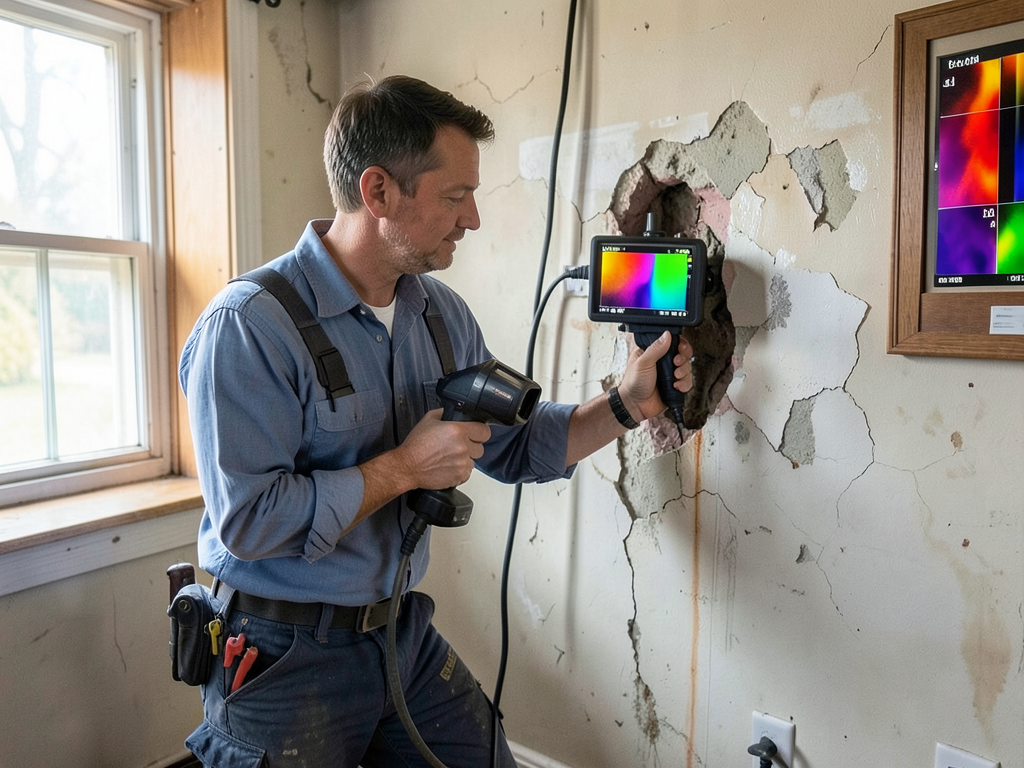
– Thermal imaging camera display showing temperature variations behind a historic plaster wall, with blue areas indicating potential water leaks.
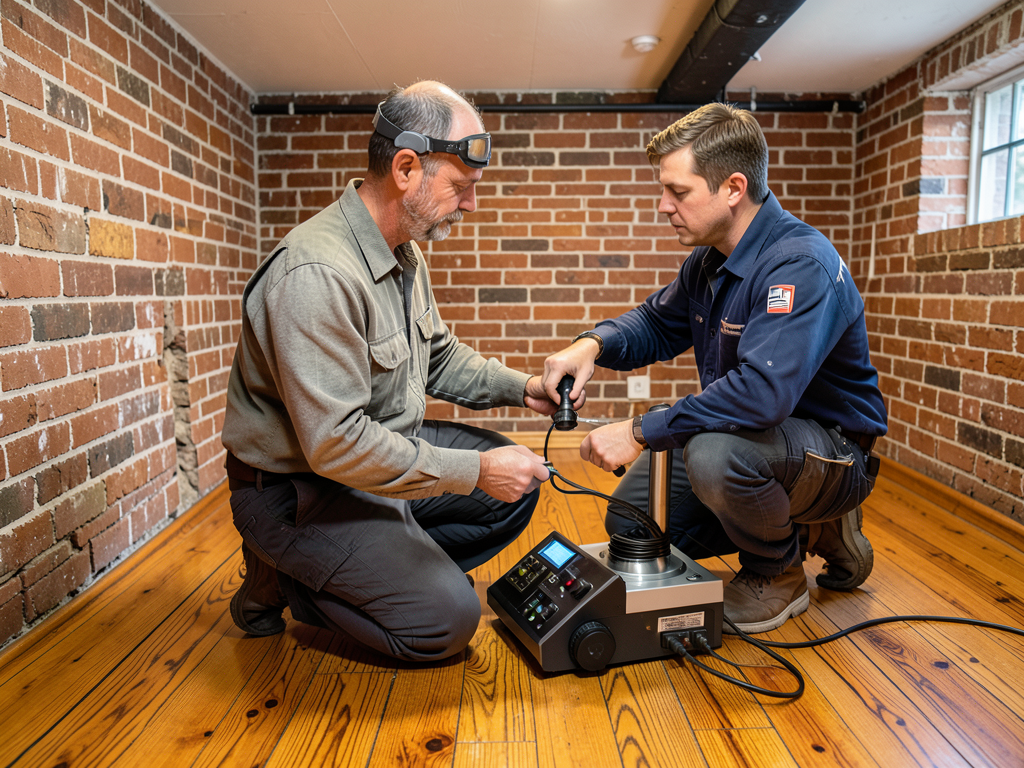
– Technician using acoustic ground microphone to listen for water leaks in a Church Hill basement with exposed brick foundation walls.
– Moisture meter reading display showing percentage moisture content in historic heart pine flooring near a suspected leak source.
Take Action Now to Protect Your Historic Home
Water leaks in Church Hill row homes worsen quickly. What starts as a small drip can become major structural damage within days. Don’t wait until you see water stains on your ceiling or feel soft spots in your floor.
Our specialized leak detection technology finds problems before they cause extensive damage. We understand the unique challenges of Richmond’s historic architecture and use methods that preserve your home’s original character.
Pick up the phone and call (804) 602-4944 before the next storm hits. Our 24/7 emergency service means we’re always ready to help Church Hill homeowners protect their historic investments. Don’t let a hidden leak destroy what makes your home special.
Summit Plumbing has served the Richmond area for years with the expertise and technology needed to handle your historic home’s plumbing challenges. Call us today at (804) 602-4944 to schedule your professional leak detection service.
{
“@context”: “https://schema.org”,
“@type”: “BlogPosting”,
“headline”: “Identifying and Fixing Hidden Water Leaks in Church Hill Row Homes”,
“description”: “Church Hill’s historic row homes need specialized leak detection. Summit Plumbing uses non-invasive technology to find hidden leaks without damaging original plaster and hardwood.”,
“wordCount”: 2483,
“datePublished”: “2026-02-23T12:34:00.000Z”,
“dateModified”: “2026-02-23T12:34:00.000Z”,
“inLanguage”: “en-US”,
“mainEntityOfPage”: {
“@type”: “WebPage”,
“@id”: “https://summitplumbingrichmond.com”
},
“publisher”: {
“@type”: “LocalBusiness”,
“name”: “Summit Plumbing Richmond”,
“url”: “https://summitplumbingrichmond.com”
},
“author”: {
“@type”: “Organization”,
“name”: “Summit Plumbing Richmond”,
“url”: “https://summitplumbingrichmond.com”
},
“image”: {
“@type”: “ImageObject”,
“url”: “https://summitplumbingrichmond.com/wp-content/uploads/2026/03/identifying-and-fixing-hidden-water-leaks-in-churc-1.png”
}
}
{
“@context”: “https://schema.org”,
“@type”: “Plumber”,
“name”: “Summit Plumbing Richmond”,
“url”: “https://summitplumbingrichmond.com”,
“address”: {
“@type”: “PostalAddress”,
“addressLocality”: “Richmond”
},
“areaServed”: {
“@type”: “City”,
“name”: “Richmond”
}
}
{
“@context”: “https://schema.org”,
“@type”: “FAQPage”,
“mainEntity”: [
{
“@type”: “Question”,
“name”: “How do I know if I have a hidden water leak?”,
“acceptedAnswer”: {
“@type”: “Answer”,
“text”: “Common signs include unexplained increases in water bills, the sound of running water when all fixtures are off, damp spots on walls or floors, musty odors, and mold growth. You can also check your water meter – if it’s moving when no water is being used, you likely have a leak.”
}
},
{
“@type”: “Question”,
“name”: “Can you find leaks without tearing into my walls?”,
“acceptedAnswer”: {
“@type”: “Answer”,
“text”: “Yes. We use non-invasive technologies like thermal imaging, acoustic detection, and tracer gas that can locate leaks through walls, floors, and ceilings without destructive testing. These methods are particularly important for historic homes where preserving original materials is crucial.”
}
},
{
“@type”: “Question”,
“name”: “How long does leak detection take?”,
“acceptedAnswer”: {
“@type”: “Answer”,
“text”: “Most residential leak detection takes 2-4 hours depending on the complexity of your plumbing system and the size of your home. Simple visible leaks may be diagnosed in under an hour, while hidden leaks requiring advanced technology take longer.”
}
},
{
“@type”: “Question”,
“name”: “What causes pipes to leak in older homes?”,
“acceptedAnswer”: {
“@type”: “Answer”,
“text”: “Common causes include corrosion of galvanized steel pipes, separation of cast iron drain joints, freeze damage, foundation settlement stressing buried lines, and mineral buildup reducing pipe diameter. Richmond’s soil chemistry and freeze-thaw cycles accelerate these problems in historic homes.”
}
},
{
“@type”: “Question”,
“name”: “Is leak detection covered by homeowners insurance?”,
“acceptedAnswer”: {
“@type”: “Answer”,
“text”: “Many policies cover the cost of detecting a covered leak, but not the repair itself. Coverage varies by policy, so check with your insurance provider. We can provide documentation that insurance companies require for claims processing.”
}
}
]
}
{
“@context”: “https://schema.org”,
“@type”: “BreadcrumbList”,
“itemListElement”: [
{
“@type”: “ListItem”,
“position”: 1,
“name”: “Home”,
“item”: “https://summitplumbingrichmond.com”
},
{
“@type”: “ListItem”,
“position”: 2,
“name”: “Blog”,
“item”: “https://summitplumbingrichmond.com/blog”
},
{
“@type”: “ListItem”,
“position”: 3,
“name”: “Identifying and Fixing Hidden Water Leaks in Church Hill Row Homes”
}
]
}
{
“@context”: “https://schema.org”,
“@type”: “Service”,
“serviceType”: “Plumbing”,
“provider”: {
“@type”: “LocalBusiness”,
“name”: “Summit Plumbing Richmond”,
“url”: “https://summitplumbingrichmond.com”
},
“areaServed”: {
“@type”: “City”,
“name”: “Richmond”
},
“description”: “Church Hill’s historic row homes need specialized leak detection. Summit Plumbing uses non-invasive technology to find hidden leaks without damaging original plaster and hardwood.”
}