
Running a Gas Line for Your New Pool Heater in King’s Charter
Adding a pool heater to your backyard oasis in King’s Charter means more than just hooking up the appliance. You need a properly sized gas line that meets Virginia code, passes inspection, and delivers consistent BTU output without pressure drops. A licensed plumber ensures your gas meter can handle the load, selects the correct pipe diameter, and installs a sediment trap and shut-off valve exactly where the code requires. The wrong installation risks unsafe operation, failed inspections, and costly rework. Virginia Uniform Statewide Building Code.
Summit Plumbing runs gas lines for pool heaters throughout King’s Charter and surrounding neighborhoods. We handle everything from the gas meter to the heater connection, including trenching, pressure testing, and permit coordination with the City of Richmond. Our crews understand the local soil conditions, building setbacks, and inspection requirements that affect your timeline and budget. Who to Call for a 24-Hour Plumbing Emergency in Downtown Richmond.
Why Pool Heater Gas Lines Need a Licensed Plumber
Pool heater gas lines fall under the Virginia Uniform Statewide Building Code (USBC) and must be installed by a licensed master plumber or gas fitter. DIY gas work is illegal in Virginia and voids insurance coverage. A licensed plumber pulls the required permit, performs a manometer pressure test, and schedules the final inspection with the county. Skipping these steps can result in fines, red-tagging of your heater, or unsafe operation.
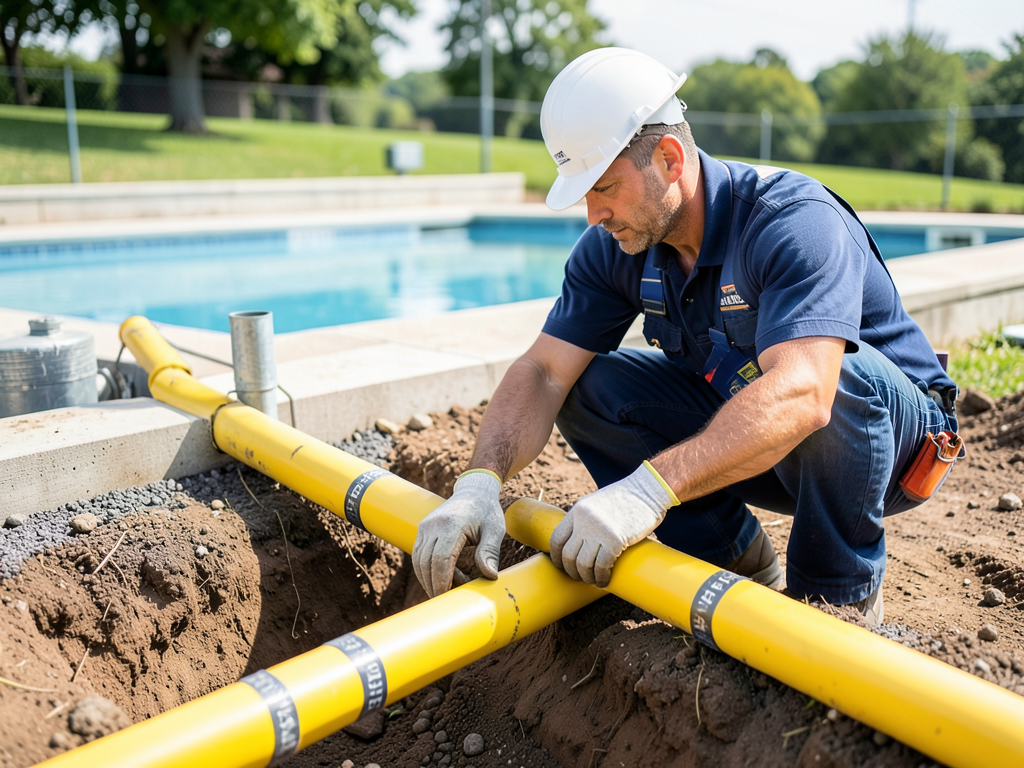
King’s Charter homes often sit on expansive clay soil that shifts with moisture changes. This movement can stress buried gas lines if they lack proper support or flexible connectors. A licensed plumber knows to use yellow polyethylene pipe or corrugated stainless steel tubing (CSST) with the correct burial depth and protective sleeves at foundation penetrations. We also install a sediment trap per code to catch debris before it reaches the heater’s gas valve.
Our Installation Process From Gas Meter to Pool Heater
Summit Plumbing follows a step-by-step process that keeps your project on schedule and up to code. First, we verify your existing gas meter capacity and determine if an upgrade is needed. Most pool heaters require 100,000 to 400,000 BTU/hr, and older 3/4-inch meters often cannot deliver that volume. If needed, we coordinate with your gas utility to replace the meter before trenching begins. Plumbing Bon Air.
Next, we locate the heater and measure the run from the meter. Longer runs require larger pipe to maintain pressure. We dig a trench at least 18 inches deep in King’s Charter soil, lay the pipe with proper bedding, and install a shut-off valve within six feet of the heater per USBC 2315.8. We pressure test the line at 1.5 times the working pressure for 15 minutes to confirm no leaks. After inspection approval, we connect the heater, install a flexible connector, and light the pilot.
Call (804) 602-4944 today to schedule your inspection.
Understanding BTU Requirements and Pipe Sizing
BTU demand dictates pipe diameter. A 200,000 BTU heater on a 20-foot run can use 3/4-inch pipe, but the same heater on a 100-foot run needs 1-inch pipe to avoid pressure drop. Undersized pipe causes the heater to shut down or run inefficiently. We use the International Fuel Gas Code (IFGC) sizing tables to match pipe diameter to BTU load and distance. International Fuel Gas Code.
King’s Charter’s older homes may have existing 1/2-inch gas lines that cannot support a new heater. We assess the entire gas system, including branch lines to the kitchen and furnace, to ensure total demand stays within meter capacity. If your home has a propane tank instead of natural gas, we size the regulator and piping for the higher pressure and different fuel characteristics.
Distance also affects trenching cost. A 30-foot run might cost $800 to $1,200, while a 150-foot run can exceed $3,000 due to labor and materials. We provide a written quote that includes permit fees, trenching, pipe, fittings, pressure testing, and inspection coordination.
Local Richmond Permits and Safety Inspections
Richmond and Chesterfield County require a plumbing permit for any new gas line over 10 feet. Summit Plumbing pulls the permit in your name, schedules the rough-in inspection after trenching, and arranges the final inspection after the heater connects. Inspectors check pipe sizing, support spacing, sediment trap installation, and shut-off valve location. Plumbing Richmond.
King’s Charter falls under Chesterfield County jurisdiction, but we also serve Richmond City homes near the James River where combined sewer and drainage lines require extra care to avoid cross-contamination. We mark all utilities before digging and use a vacuum excavator near known lines to prevent damage. If your property has a septic system, we verify the gas line route avoids the drain field and reserve area. Sewer Line Repairs for Historic Houses in the Museum District.
After passing inspection, we submit the final paperwork to your gas utility so they can activate the line. We also provide you with a copy of the permit, inspection reports, and warranty information for the pipe and fittings.
Frequently Asked Questions
How long does pool heater gas line installation take?
Most installations complete in one to two days. Trenching and pipe laying take a few hours, pressure testing and inspection scheduling add a day, and final connections happen after approval. Weather or inspection delays can extend the timeline.
Can I use my existing gas line for a new pool heater?
Only if the line is properly sized and has available capacity. We test your system and tell you if an upgrade is needed. Running a high-BTU heater on an undersized line causes pressure drop and unsafe operation.
What’s the difference between natural gas and propane for pool heaters?
Natural gas arrives at your home through utility pipes and requires a meter. Propane needs an on-site tank and a different regulator. Propane stores more energy per cubic foot, so pipe sizing differs. We help you choose based on availability and long-term cost.
Do I need a separate permit if I already have a gas line?
Yes. Any new connection to a gas line over 10 feet requires a permit and inspection, even if you reuse existing pipe. This ensures the entire system meets current code.
How deep should the gas line trench be?
Code requires 18 inches minimum in residential areas. We dig to that depth and use protective tape or sand bedding to prevent damage from rocks or future digging.
Will trenching damage my landscaping?
We minimize impact by hand-digging near plants and using a narrow trenching machine. We restore sod or mulch after backfilling and leave the site clean.
Pick up the phone and call (804) 602-4944 before the next storm hits.
Comparing Gas Line Materials for Pool Heaters
| Material | Pros | Cons | Best Use |
|---|---|---|---|
| Black Steel Pipe | Durable, code-approved for all runs | Heavy, prone to corrosion if not galvanized | Short indoor runs or where protection is easy |
| Yellow Polyethylene (PE) | Flexible, corrosion-proof, easy to join | Requires specialty fittings, not for inside buildings | Underground runs in clay or wet soil |
| Corrugated Stainless Steel (CSST) | Flexible, lightweight, fast installation | Needs bonding per code, can be punctured | Interior or protected exterior runs |
Pool Heater BTU vs. Pipe Size Quick Reference
| BTU Rating | Up to 30 ft | 30-100 ft | Over 100 ft |
|---|---|---|---|
| 100,000 | 3/4" | 3/4" | 1" |
| 200,000 | 3/4" | 1" | 1-1/4" |
| 300,000 | 1" | 1-1/4" | 1-1/2" |
{
“@context”: “https://schema.org”,
“@type”: “BlogPosting”,
“headline”: “Running a Gas Line for Your New Pool Heater in King’s Charter”,
“description”: “Need a gas line for your pool heater in King’s Charter? Summit Plumbing handles permits, trenching, and safe connections. Call (804) 602-4944 for expert installation.”,
“wordCount”: 1225,
“datePublished”: “2026-05-18T15:38:00.000Z”,
“dateModified”: “2026-05-18T15:38:00.000Z”,
“inLanguage”: “en-US”,
“mainEntityOfPage”: {
“@type”: “WebPage”,
“@id”: “https://summitplumbingrichmond.com”
},
“publisher”: {
“@type”: “LocalBusiness”,
“name”: “Summit Plumbing Richmond”,
“url”: “https://summitplumbingrichmond.com”
},
“author”: {
“@type”: “Organization”,
“name”: “Summit Plumbing Richmond”,
“url”: “https://summitplumbingrichmond.com”
},
“image”: {
“@type”: “ImageObject”,
“url”: “https://summitplumbingrichmond.com/wp-content/uploads/2026/03/running-a-gas-line-for-your-new-pool-heater-in-kin-1.png”
}
}
{
“@context”: “https://schema.org”,
“@type”: “Plumber”,
“name”: “Summit Plumbing Richmond”,
“url”: “https://summitplumbingrichmond.com”,
“address”: {
“@type”: “PostalAddress”,
“addressLocality”: “Richmond”
},
“areaServed”: {
“@type”: “City”,
“name”: “Richmond”
}
}
{
“@context”: “https://schema.org”,
“@type”: “FAQPage”,
“mainEntity”: [
{
“@type”: “Question”,
“name”: “How long does pool heater gas line installation take?”,
“acceptedAnswer”: {
“@type”: “Answer”,
“text”: “Most installations complete in one to two days. Trenching and pipe laying take a few hours, pressure testing and inspection scheduling add a day, and final connections happen after approval. Weather or inspection delays can extend the timeline.”
}
},
{
“@type”: “Question”,
“name”: “Can I use my existing gas line for a new pool heater?”,
“acceptedAnswer”: {
“@type”: “Answer”,
“text”: “Only if the line is properly sized and has available capacity. We test your system and tell you if an upgrade is needed. Running a high-BTU heater on an undersized line causes pressure drop and unsafe operation.”
}
},
{
“@type”: “Question”,
“name”: “What’s the difference between natural gas and propane for pool heaters?”,
“acceptedAnswer”: {
“@type”: “Answer”,
“text”: “Natural gas arrives at your home through utility pipes and requires a meter. Propane needs an on-site tank and a different regulator. Propane stores more energy per cubic foot, so pipe sizing differs. We help you choose based on availability and long-term cost.”
}
},
{
“@type”: “Question”,
“name”: “Do I need a separate permit if I already have a gas line?”,
“acceptedAnswer”: {
“@type”: “Answer”,
“text”: “Yes. Any new connection to a gas line over 10 feet requires a permit and inspection, even if you reuse existing pipe. This ensures the entire system meets current code.”
}
},
{
“@type”: “Question”,
“name”: “How deep should the gas line trench be?”,
“acceptedAnswer”: {
“@type”: “Answer”,
“text”: “Code requires 18 inches minimum in residential areas. We dig to that depth and use protective tape or sand bedding to prevent damage from rocks or future digging.”
}
},
{
“@type”: “Question”,
“name”: “Will trenching damage my landscaping?”,
“acceptedAnswer”: {
“@type”: “Answer”,
“text”: “We minimize impact by hand-digging near plants and using a narrow trenching machine. We restore sod or mulch after backfilling and leave the site clean.”
}
}
]
}
{
“@context”: “https://schema.org”,
“@type”: “BreadcrumbList”,
“itemListElement”: [
{
“@type”: “ListItem”,
“position”: 1,
“name”: “Home”,
“item”: “https://summitplumbingrichmond.com”
},
{
“@type”: “ListItem”,
“position”: 2,
“name”: “Blog”,
“item”: “https://summitplumbingrichmond.com/blog”
},
{
“@type”: “ListItem”,
“position”: 3,
“name”: “Running a Gas Line for Your New Pool Heater in King’s Charter”
}
]
}
{
“@context”: “https://schema.org”,
“@type”: “Service”,
“serviceType”: “Plumbing”,
“provider”: {
“@type”: “LocalBusiness”,
“name”: “Summit Plumbing Richmond”,
“url”: “https://summitplumbingrichmond.com”
},
“areaServed”: {
“@type”: “City”,
“name”: “Richmond”
},
“description”: “Need a gas line for your pool heater in King’s Charter? Summit Plumbing handles permits, trenching, and safe connections. Call (804) 602-4944 for expert installation.”
}